With decades of proven expertise, we deliver first-class cathodic and anodic protection solutions to clients worldwide. Backed by extensive resources and long-term partnerships, we manage projects of any scale, complexity, or location, ensuring reliable service from start to completion.
To incorporate all necessary project-specific data into the detailed planning, we offer you a site survey including environmental assessment, localization of site-relevant influencing factors and the necessary measurements.

Using the information you provide and the data from the preliminary measurements, we will create a cathodic protection (CPP) concept tailored to your needs. Adherence to all relevant legal and customer-specific standards is mandatory. Furthermore, all CPP services are designed for environmental compatibility, sustainability, and longevity.

Using the information you provide and the data from the preliminary measurements, we will create a cathodic protection (CPP) concept tailored to your needs. Adherence to all relevant legal and customer-specific standards is mandatory. Furthermore, all CPP services are designed for environmental compatibility, sustainability, and longevity.

To ensure the effectiveness of the cathodic corrosion protection, regular functional checks of the protection systems and targeted monitoring measurements on the systems are required.
By carrying out these measurements and maintenance work as part of our cathodic protection services, potential risks can be reliably identified and eliminated before failures and damage occur.
It is not for nothing that the legislator prescribes regular inspections for many systems. The need for action defined by you is implemented by us in such a way that you no longer have to worry about it.
OUR SERVICES FOR THE SMOOTH OPERATION OF YOUR SYSTEMS :
YOUR ADVANTAGES :
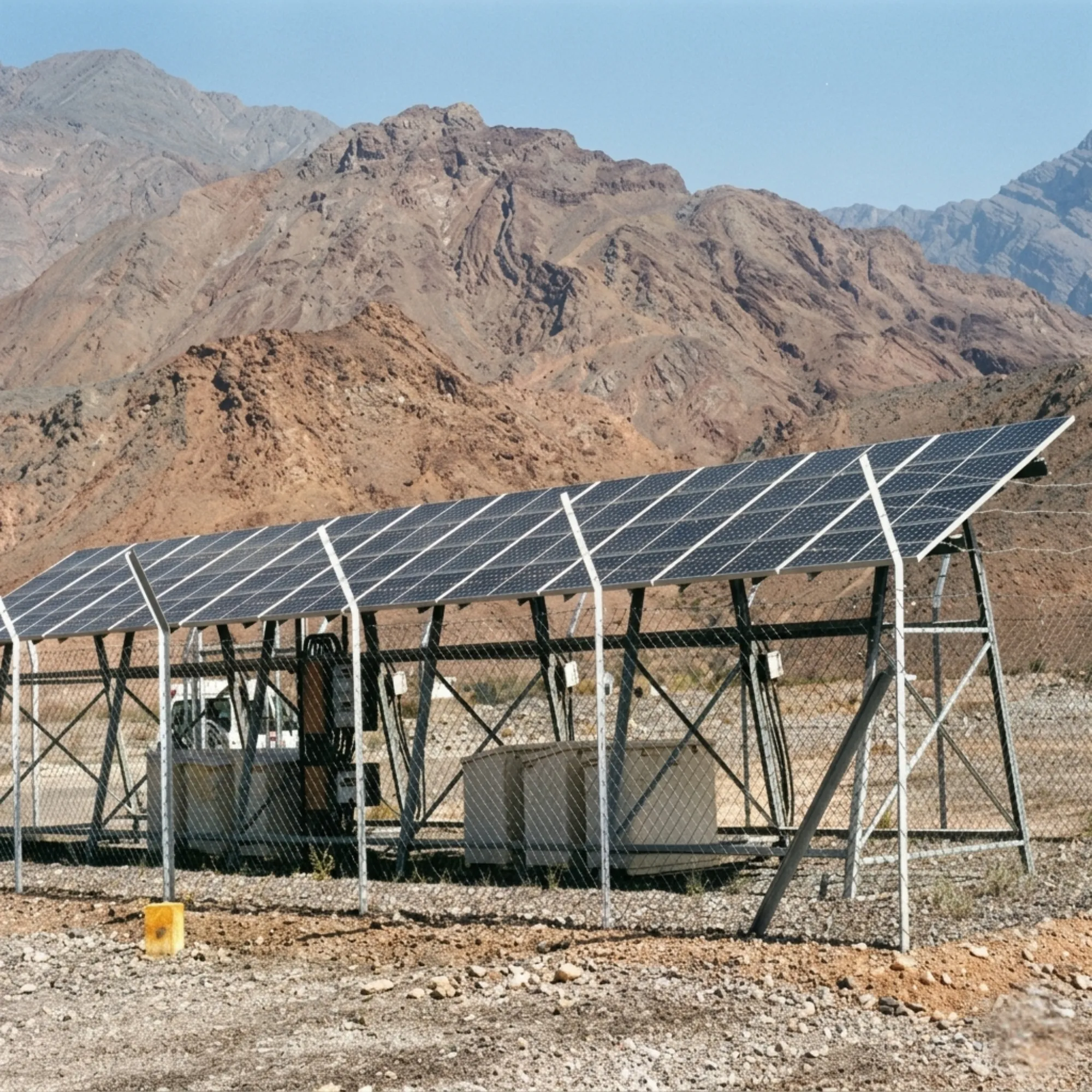
CATHODIC PROTECTION SYSTEM INSTALLATION SERVICES :
SURFACE BED INSTALLATIONS :
DEEP ANODE GROUNDBEDS :
AC AND DC MITIGATION :
CONCRETE SERVICES :
ELECTRICAL INSTALLATION :
LINEAR ANODE INSTALLATIONS :
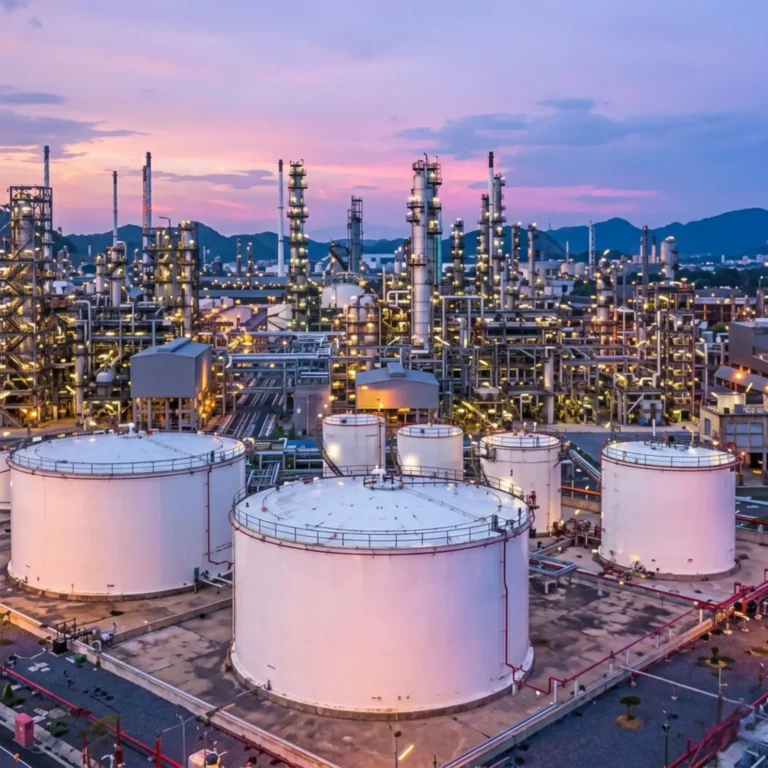
Before and during the installation of a cathodic protection system (CPS), a variety of tasks, some requiring expert assessment, often need to be carried out. In accordance with applicable regulations, standards, and any customer specifications, we conduct all types of tests and inspections.
WE ALSO MAKE IT POSSIBLE FOR YOU TO:

CORROSION ENGINEERING SOLUTIONS :
CORROSION ENGINEERING SERVICES :
RECLAMATION & REMEDIATION COORDINATION :
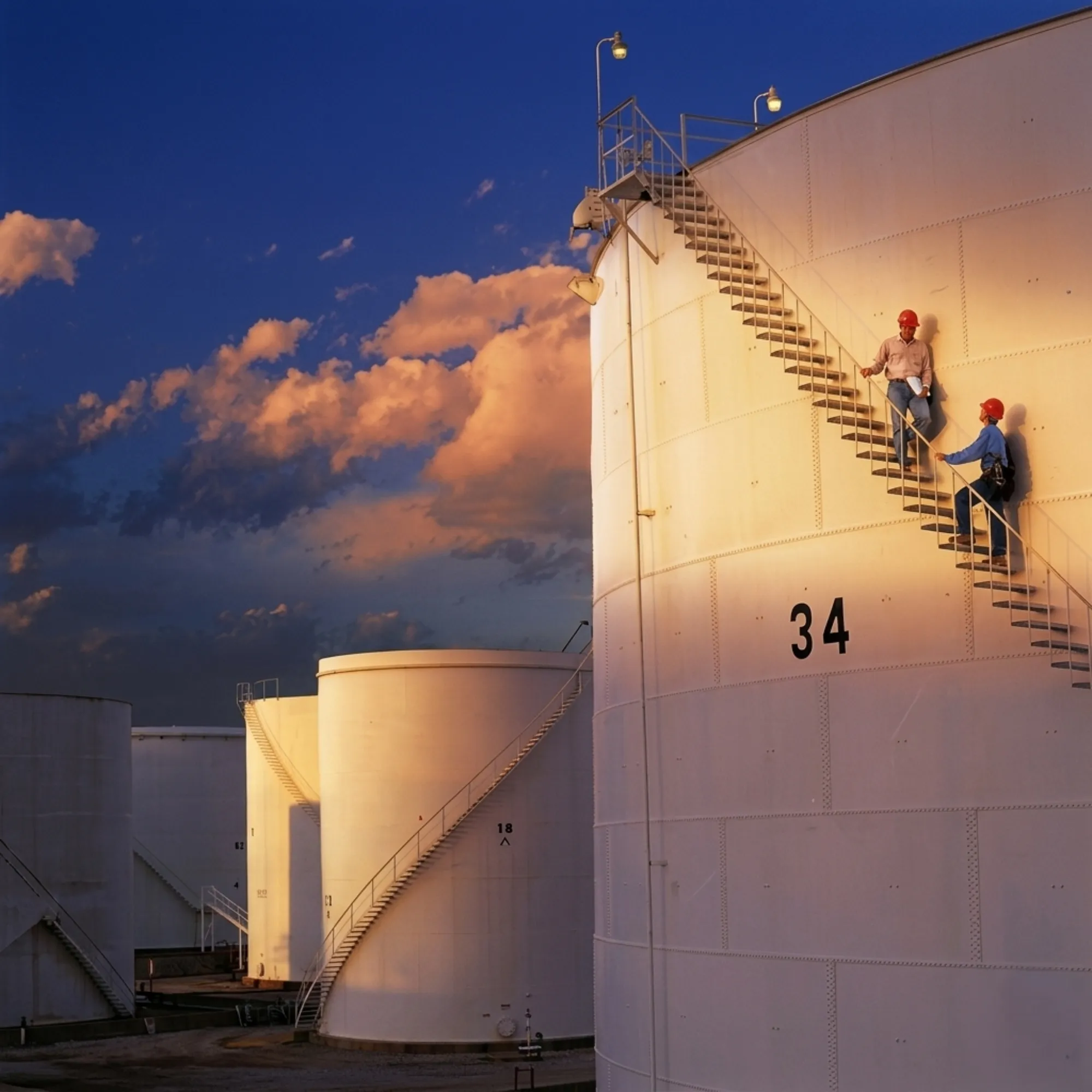
INDEPENDENT EYES FOR MAXIMUM SAFETY :
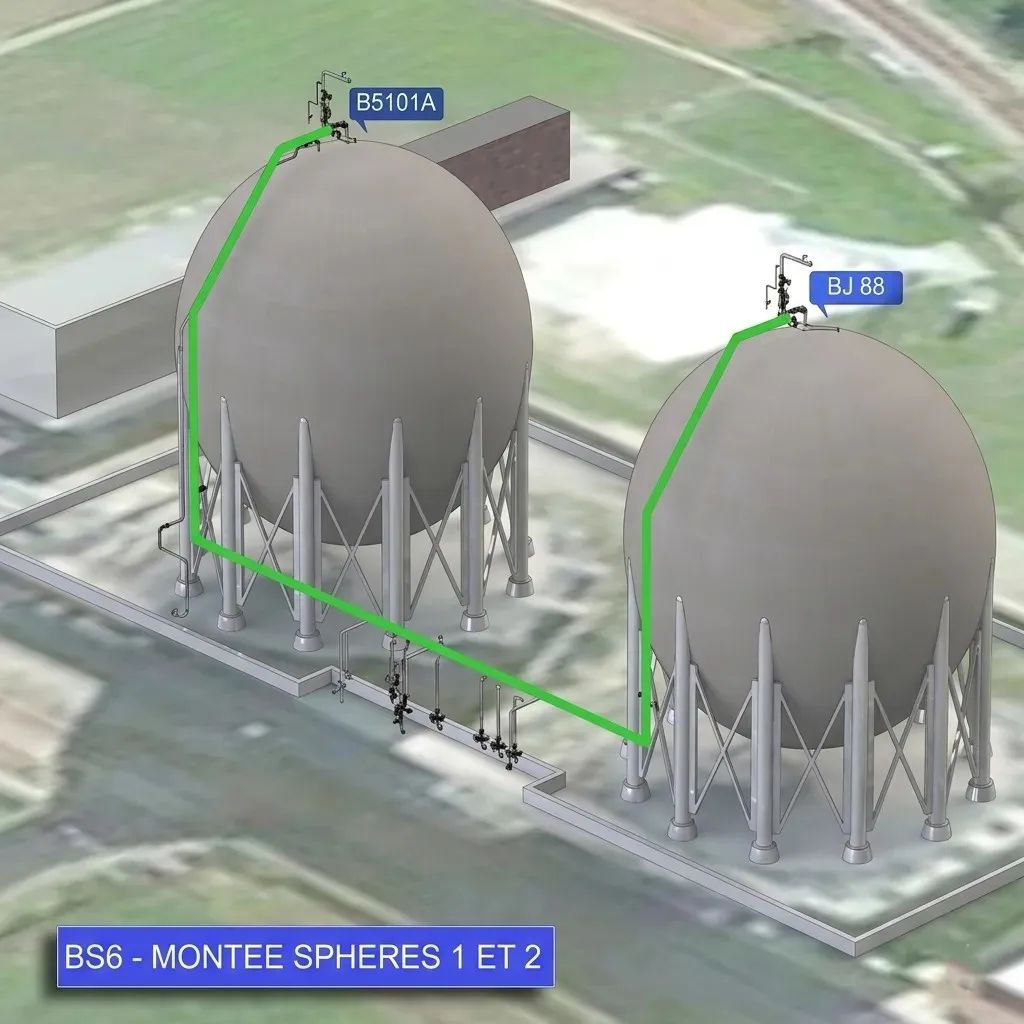
Every cathodic protection system can become faulty even after years of trouble-free operation. Typical examples are contact with foreign cathodes, e.g. new foundations, defective insulating sections or spark gaps due to contact with third-party installations.
We are able to carry out all different versions of troubleshooting. In particular, 100Hz technology can achieve fast and cost-effective results thanks to its precision. This applies in particular to meshed piping systems.
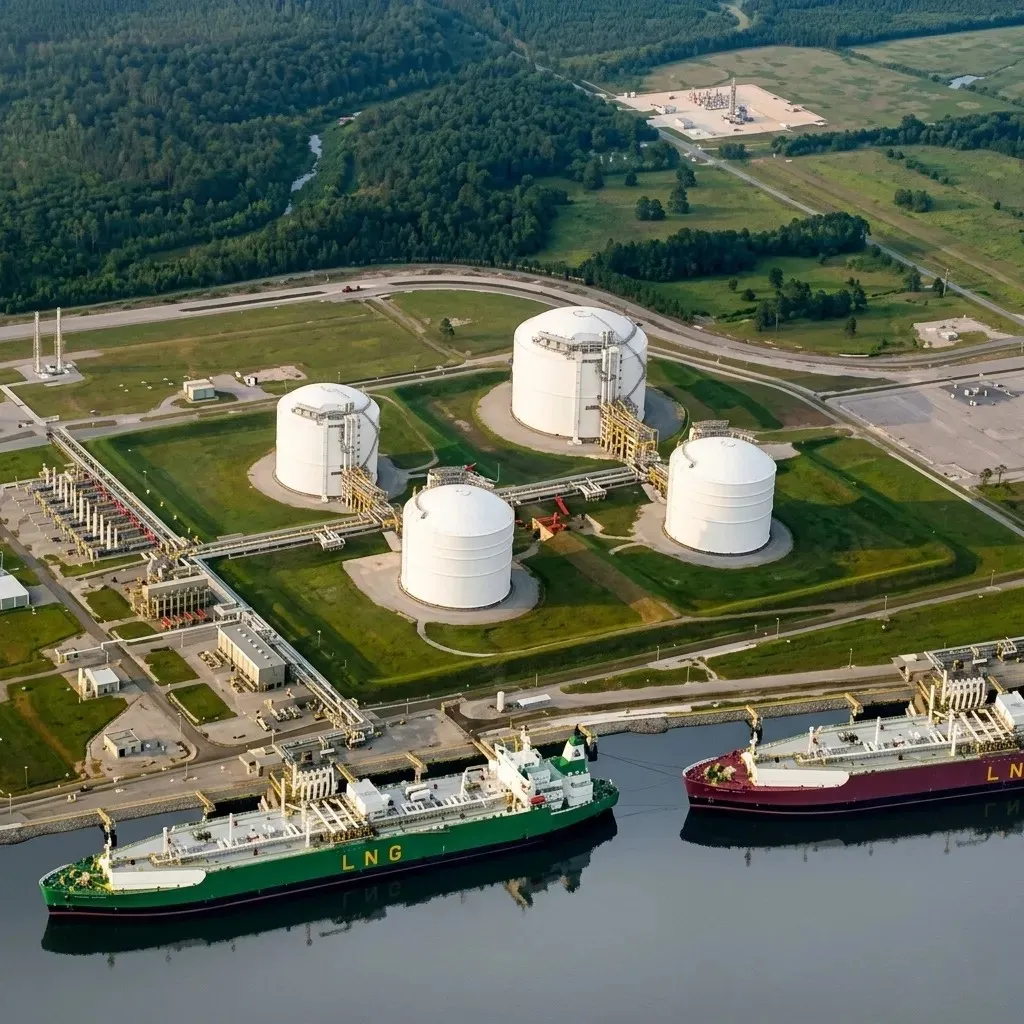
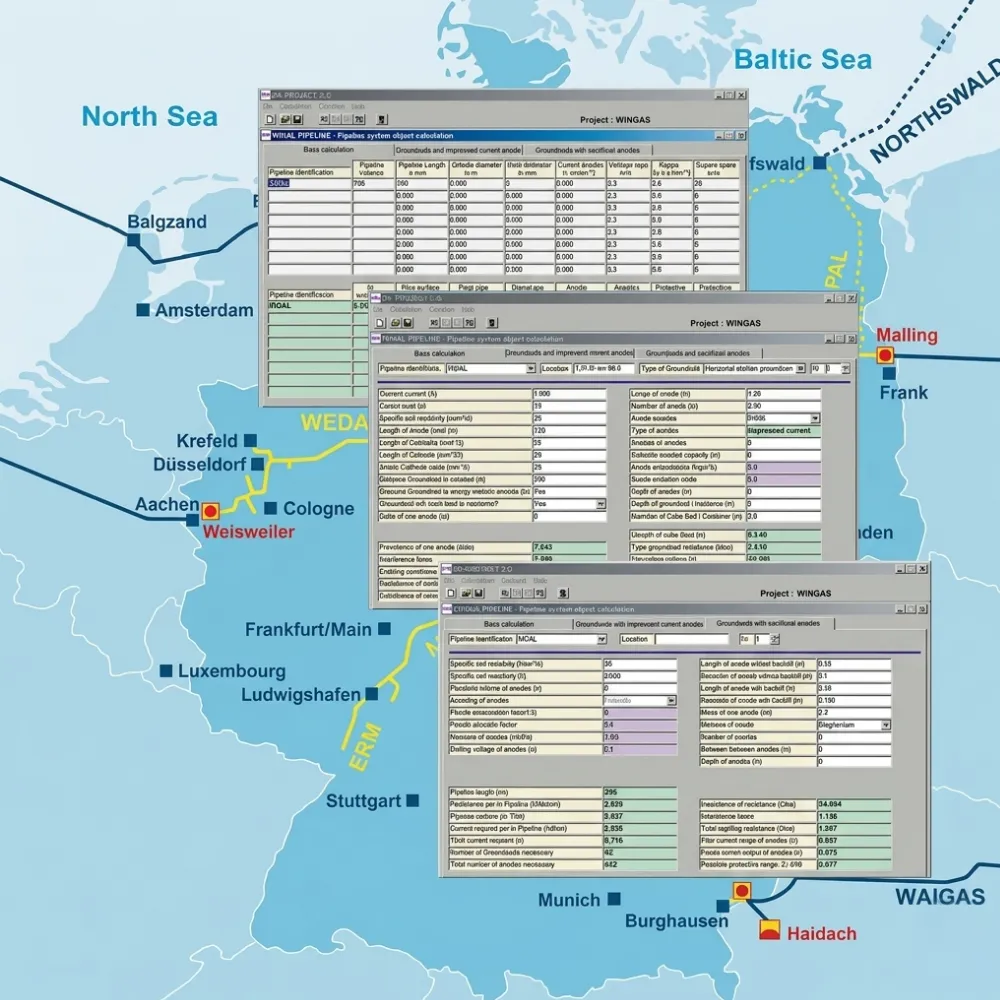
TURN COMPLEX DATA INTO SMART DECISIONS.
PIPELINE ROUTING :
PIPELINE DATA :
HIGH VOLTAGE OVERHEAD LINE DATA :
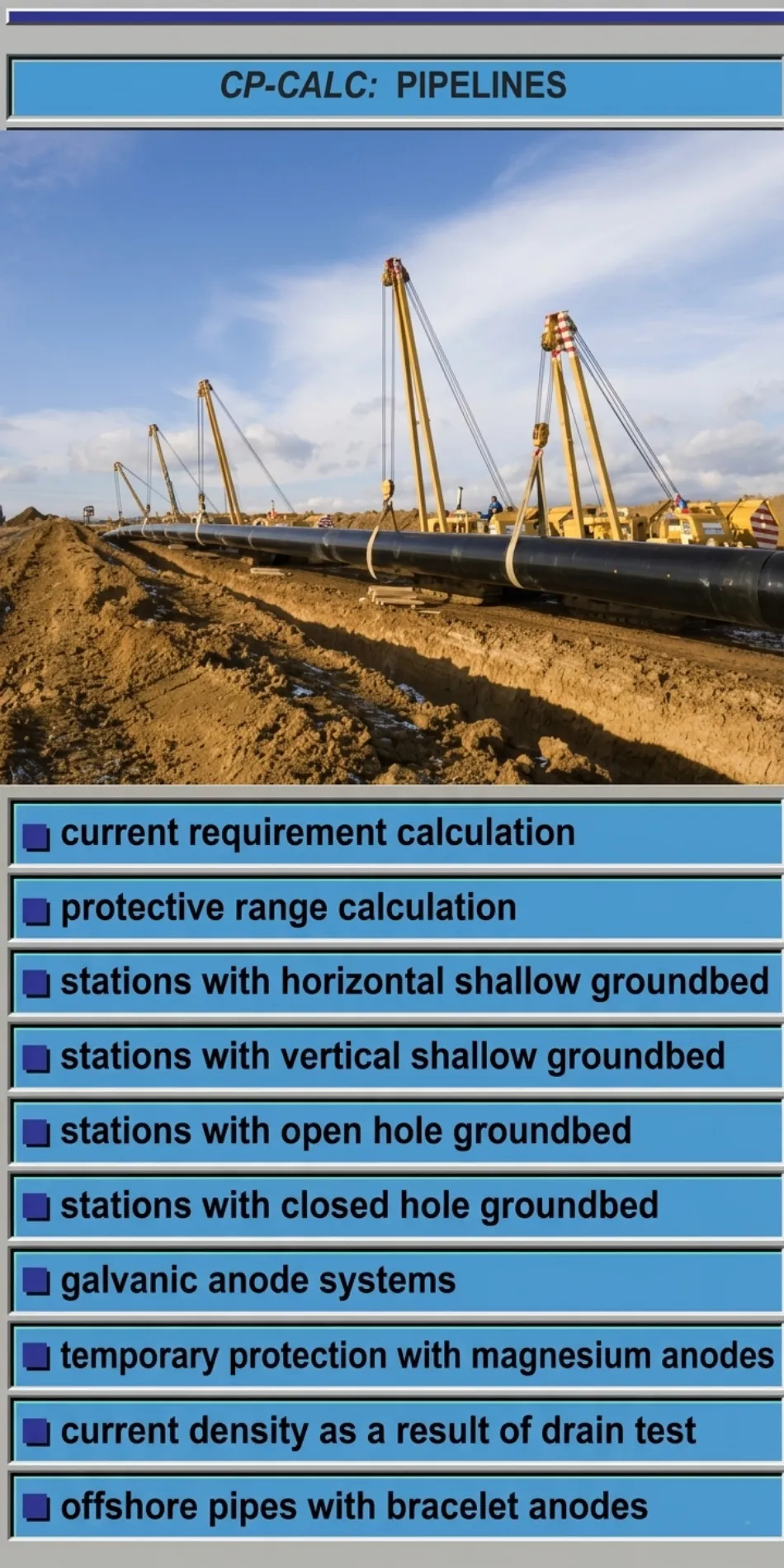
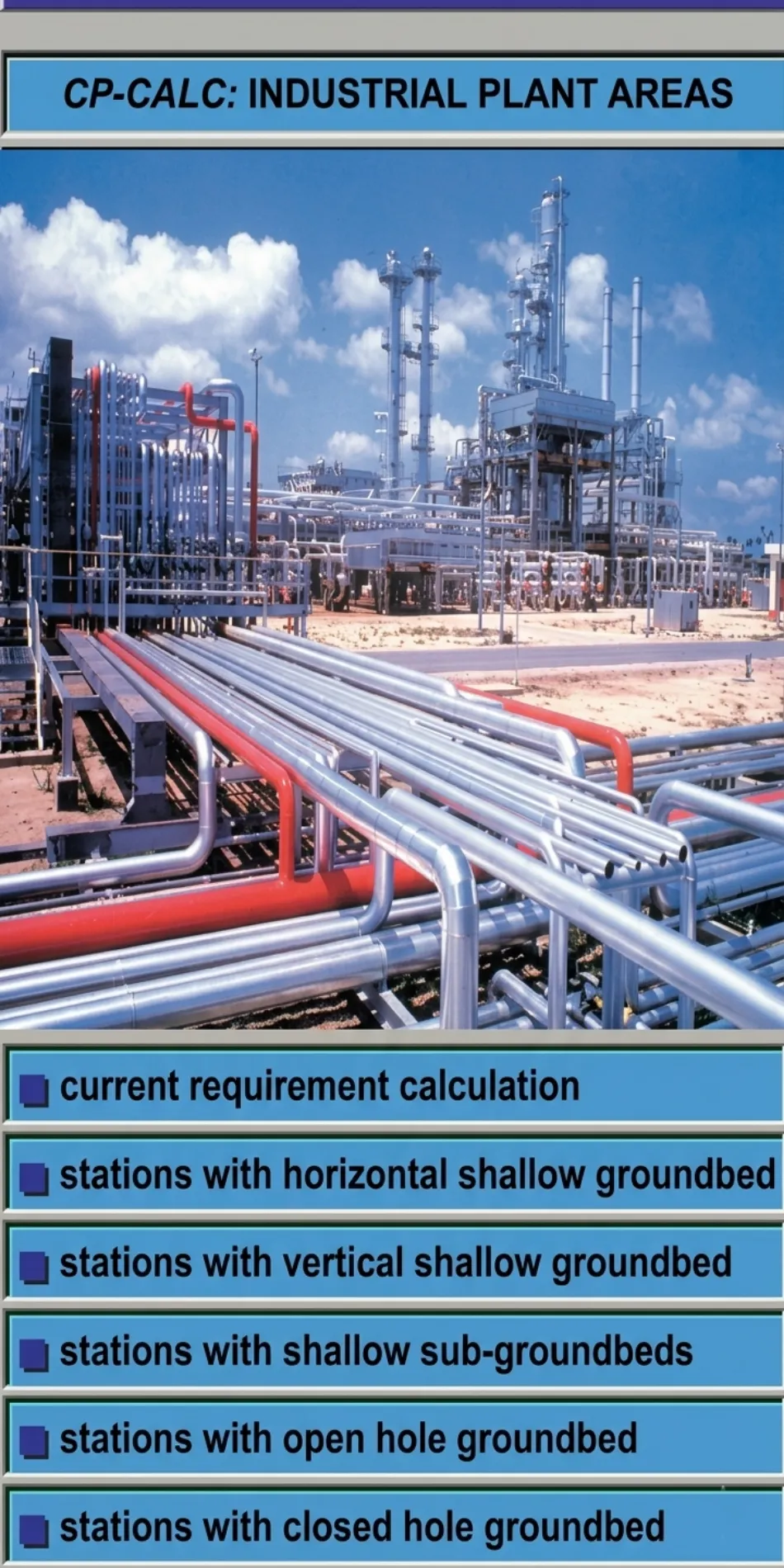
Corrosion occurs wherever metal surfaces come into contact with electrolytes in which oxygen is present. In most cases, this electrolyte is water mixed with additives such as salt or other chemical substances. The strength and type of corrosion depends on the composition. Corrosion protection is therefore necessary to maintain the long-term stability of buildings that are made of or contain metals.
CP or cathodic corrosion protection is used either as a legally prescribed supplement to passive corrosion protection such as a coating to provide long-term protection. For other objects where coating is not technically possible or not practical, cathodic corrosion protection is used independently. This is typically the case with sheet piling in harbor areas, where the abrasion of a coating is so severe due to the sandy environment that it would not last anyway.
Corrosion is an oxidation process that always requires a combination of oxygen and moisture. The original principle is the affinity of steel in combination with oxygen to go into a lower energy state and that is corrosion. At the atomic level, the metal reacts to the presence of oxygen and a liquid by releasing electrons, causing it to decompose.
Cathodic corrosion protection works by turning the metal of the protected object into a cathode in the electrical circuit by means of an electrical source. In this way, electrons are supplied to the object to be protected, which are then available at the phase boundary (where the metal comes into contact with oxygen and a liquid) and therefore no electrons can be removed from the atomic structure of the metal. This prevents oxidation and corrosion.
Various environmental protection and safety regulations require the use of Cathodic Protection. Depending on the environment in which the protected object is used, the regulations of the standards and regulations of the respective responsible bodies come into force. Cathodic corrosion protection is mandatory for all liquids or gases that are hazardous to drinking water, toxic, harmful to the environment or could explode.
The DVGW (German Technical and Scientific Association for Gas and Water) defines a set of regulations that stipulates the requirements and obligations for the protection of buildings. Potential danger to the environment must be averted. For example, CP is important to ensure the tightness of metal pipelines in order to prevent safety-relevant operating materials from leaking into the groundwater.
Passive corrosion protection can also provide a remedy, but only if the coating is completely undamaged and the surface is thus separated from oxygen and moisture. Passive protection alone is therefore never safe and is usually secured by cathodic corrosion protection. In some cases, cathodic corrosion protection is even used exclusively.